

Emergency Water Heater Repair: What to Expect
A failing water heater rarely picks a convenient time. One morning there's no hot water; another day you find a puddle spreading across the garage floor. Knowing the warning signs, and the few safe steps to take before help arrives, can keep a bad day from turning into a flooded home.
- Top Notch Plumbing · Port St. Lucie, FL
- All posts
The warning signs of a water heater emergency
A water heater emergency is any condition that risks property damage, personal safety, or the loss of hot water you rely on. These are the signs that mean you should stop and act:
- Water pooling around the base: points to an active tank or valve failure and the risk of real water damage.
- Loud banging, popping, or rumbling: usually sediment buildup causing the tank to overheat.
- Rusty or discolored hot water: often internal corrosion, which can lead to a tank rupture.
- A gas smell near the unit: treat this as an immediate safety issue, not a plumbing one.
- No hot water at all: an element, thermostat, pilot, or gas-supply failure depending on your unit.
Safe first steps before we arrive
If you spot one of those signs, a few quick actions limit the damage. Do only what's safe:
- Shut off the cold-water supply valve to the heater to stop water feeding the leak.
- Cut power at the breaker for an electric unit, or close the gas shutoff valve for a gas unit.
- Contain the leak with buckets and towels, and move anything valuable away from the area.
- If you smell gas, don't touch valves or switches. Leave the building and call the gas company from outside.
Never touch an electrical panel with wet hands, and don't attempt repairs on gas fittings yourself. These steps simply stabilize things until a licensed technician can take over.
When it's worth calling for emergency service
Call right away when the situation threatens safety or property: a major leak reaching floors or electrical equipment, any gas odor, a visibly ruptured or badly corroded tank, or a relief valve that keeps discharging. Waiting a few hours in those cases is how a repair becomes a replacement, and a wet floor becomes ruined drywall.
How the repair visit works
When you call Top Notch, here's how a visit typically unfolds. No mystery, no runaround:
- We arrive and diagnose. We check for leaks, test heating elements or the pilot and gas supply, inspect the temperature-and-pressure (T&P) relief valve, and assess the tank itself.
- We explain your options. You get a clear rundown of what failed, what it takes to fix it, and an honest read on repair versus replacement, before any work starts.
- We do the work. Many issues (a bad element, a T&P valve, a leaking fitting, or a sediment flush) are handled in a single visit. If a full replacement is needed, we'll get you stabilized and scheduled fast.
Because we're a licensed, insured, in-house crew (Florida CFC1426983), the plumber who diagnoses the problem is the one who fixes it, and we handle any permit the job requires.
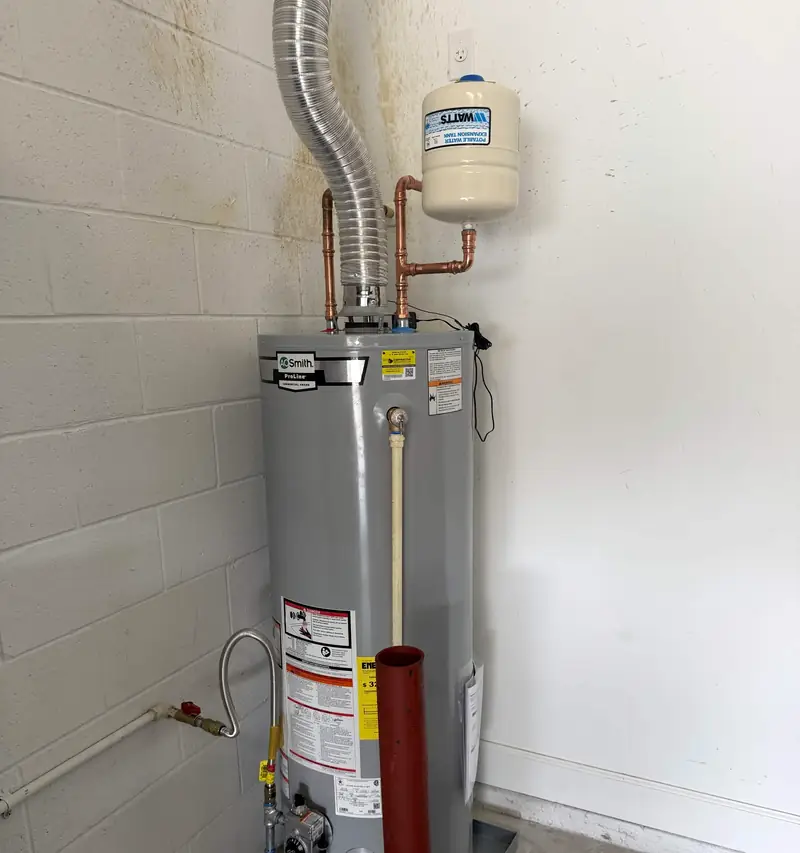
Repair or replace?
A good rule of thumb: lean toward replacement when the heater is past 10 to 12 years old, when a single repair would cost roughly half of a new unit, or when there's real internal corrosion. Isolated part failures on a newer tank usually favor a straightforward repair. We'll give you the numbers and let you decide, with no pressure to buy a heater you don't need.