


If your water heater fails, leaks, or stops delivering hot water, the situation can escalate quickly into property damage, safety hazards, and loss of essential services. This guide explains what constitutes an emergency water heater repair, how to act immediately, and what you can expect from a 24/7 emergency plumber handling gas, electric, tankless, or hybrid units. You will learn how to recognize urgent symptoms, the step-by-step actions to reduce harm, and the diagnostic and repair process technicians follow on-site. The article also compares common failures, outlines decision criteria for repair versus replacement, and highlights maintenance steps that reduce future emergency calls. Throughout, expect practical troubleshooting, safety-first instructions, and local context for Treasure Coast homeowners who need fast emergency plumbing for water heaters.
What Are the Common Signs of a Water Heater Emergency?
A water heater emergency is any condition that risks property damage, personal safety, or loss of essential hot water services and requires immediate attention. Typical mechanisms include active leaks from the tank or fittings, electrical faults near standing water, gas odors from a pilot light or gas valve, and sudden complete loss of hot water in critical settings. Recognizing these signs early reduces damage and speeds response, which is why quick visual checks and basic safety steps are essential. Below are the most common signs organized for fast recognition and triage.
The following bulleted list highlights key emergency symptoms and short explanations to help homeowners triage risk.
- Visible leak or pooling water around the heater: Indicates active tank or valve failure and risk of structural damage.
- No hot water with tripping breakers or gas pilot issues: Signals electrical element failure or fuel supply/pilot malfunction that affects service delivery.
- Loud banging, popping, or rumbling noises: Often caused by sediment buildup causing overheating and potential pressure events.
- Rusty or discolored water coming from taps: Suggests internal corrosion that may precede tank rupture or leaks.
These signs point to urgent next steps: shut off water and power, contain leaks, and contact emergency plumbing services. Knowing the symptom meaning makes it easier to decide whether to attempt safe checks or call for immediate professional help.
How to Recognize Water Heater Leaks and Rusty Water Issues

Leaking water heaters typically reveal the leak location through pooled water, dripping from the drain valve, inlet/outlet fittings, or a failing tank seam. The mechanism is either a fixture/fitting failure or internal corrosion of the tank material, and the benefit of quick identification is preventing widespread water damage. A homeowner should inspect the base, look for rust streaks, and test visible valves for active dripping while avoiding contact with electrical components. If rust-colored water appears, it usually indicates internal corrosion of the tank lining; this suggests imminent failure and should prompt an emergency water heater repair service call.
Containment steps reduce damage: shut off the cold-water inlet, place buckets under drips, and move valuables away from the area. These immediate actions stabilize the situation until a technician performs a full diagnosis and recommends repair or replacement.
What Does No Hot Water or Strange Noises Indicate in Your Water Heater?
Loss of hot water and unusual noises are symptoms that reveal specific internal failures depending on heater type: electric units often suffer heating element or thermostat failure, while gas units may have pilot or gas supply issues. Sediment accumulation on tank bottoms causes popping, rumbling, and reduced capacity because trapped water overheats, and the practical result is lower efficiency and potential overheating. Homeowners can safely check circuit breakers and the pilot light for basic clues, but must avoid DIY work that exposes wiring or gas lines.
When noises are sustained or temperature control fails, the risk escalates to element burnout, valve failure, or structural stress on the tank; calling an emergency water heater repair service prevents further damage and restores safe operation. Understanding these failure mechanisms helps homeowners communicate symptoms clearly during an emergency call.
What Immediate Steps Should You Take During a Water Heater Emergency?

Immediate actions in a water heater emergency focus on stopping further damage, eliminating immediate safety hazards, and preserving evidence for technicians to diagnose. The mechanism of these steps is simple: cut fuel and water sources to the appliance, mitigate leaks, and avoid electrical contact with standing water. By following a prioritized checklist, homeowners reduce property loss and speed the repair timeline. Below are practical, safety-first steps to take as soon as an emergency is recognized.
- Shut off the cold-water supply to the heater to stop incoming water and limit pooling around the unit.
- Turn off electrical power at the breaker for electric heaters or close the gas shutoff valve for gas units; do not attempt to work on gas lines if you smell gas.
- Contain leaks with buckets and towels, move furniture away, and protect floors to minimize damage until a technician arrives.
- If you detect a gas odor, evacuate the building immediately and contact the gas company and emergency services from a safe location.
Taking these actions buys time for professionals to arrive and prevents escalation. After stabilizing the scene, document visible damage and symptoms to provide the technician a concise history for faster diagnosis.
How Do You Safely Shut Off Water and Power to Prevent Damage?
Shutting off water and power prevents further flooding and electrical hazards and is the foundational immediate mitigation step. The homeowner should locate and close the cold-water inlet valve on the heater, typically a lever or round valve on the pipe entering the tank, and verify that water flow to taps has stopped. For electric heaters, switch off the dedicated breaker at the electrical panel; for gas units, close the gas shutoff valve near the appliance—if you smell gas, evacuate and call the gas company instead of manipulating valves.
Safety note: never touch electrical panels with wet hands or attempt to repair gas fittings yourself; these actions reduce immediate damage and create a safer environment for arriving technicians to inspect and repair the system.
When Is It Critical to Call for 24/7 Emergency Water Heater Repair?
Call for 24/7 emergency service when the situation threatens safety, property, or essential operations—these are the red-flag criteria used by emergency plumbing provider. Critical triggers include major leaks that saturate floors or reach electrical equipment, any detectable gas odor near the heater, visible tank rupture or severe corrosion, complete lack of hot water in a commercial setting, or continuous high-pressure valve discharge. The mechanism here is risk assessment: urgent professional intervention prevents structural damage, fire, or carbon monoxide exposure.
If a homeowner observes one or more red flags, contacting an emergency plumbing provider immediately ensures fast response and mitigation to stabilize the system until permanent repair or replacement can be completed.
How Does the Emergency Water Heater Repair Process Work with Top Notch Plumbing Pros?
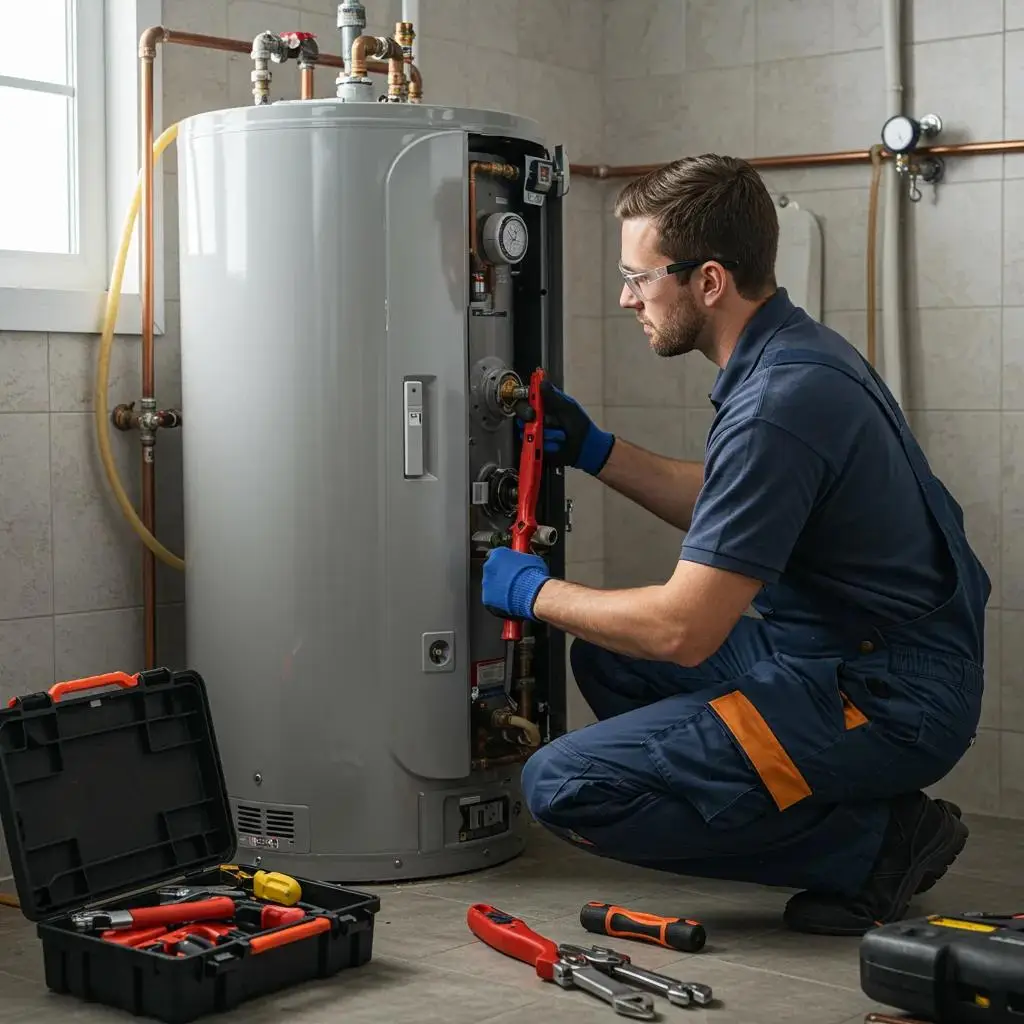
During an emergency call, the process typically begins with rapid dispatch, on-site diagnosis, a transparent estimate, and either immediate repair or temporary mitigation depending on parts and safety. The mechanism is a triage-to-resolution workflow: dispatch triages severity, technicians diagnose causes, then present options and cost estimates before proceeding. Expect an on-site timeline that varies by problem complexity but prioritizes restoring safe hot water service while limiting further damage. The following numbered steps explain how a professional emergency visit commonly unfolds.
- Dispatch and fast arrival: a 24/7 call center prioritizes emergencies and routes a nearby technician to your location.
- On-site diagnosis: the technician inspects for leaks, tests heating elements or pilot systems, checks the T&P relief valve, and assesses tank integrity.
- Transparent estimate and authorization: the technician explains repair options, provides an itemized estimate when possible, and obtains homeowner approval before work begins.
- Repair or temporary mitigation: repairs are completed when parts and safety allow; if immediate replacement is required and parts are unavailable, temporary measures reduce risk until full service is possible.
Top Notch Plumbing Pros offers 24/7 emergency response, licensed and insured technicians (CFC1426983), and free estimates with a fast-response promise for Treasure Coast homeowners. If you need immediate assistance, calling their emergency line provides direct access to local, trained technicians who can diagnose and stabilize your system quickly.
What Happens During the Diagnosis and Repair Visit?
A thorough diagnosis follows a consistent checklist: visual inspection of tank and fittings, leak source verification, electrical and thermostat testing for electric units, pilot and gas supply checks for gas units, and pressure relief valve evaluation. This diagnostic mechanism identifies whether a component-level repair, valve replacement, sediment flush, or full tank replacement is required. Technicians will explain findings and the pros and cons of each option to the homeowner and discuss time-to-fix estimates based on parts availability. The benefit of this structured approach is clear communication and a predictable timeline, which helps homeowners plan for repairs and temporary water service interruptions.
Expect common fixes such as element replacement, T&P valve swap, leak clamp and valve replacement, or sediment flushing to be completed in a single visit when parts are stocked and safety allows.
How Are Transparent Estimates and Fast Repairs Delivered?
Transparent estimates break down parts, labor, and any emergency or after-hours premiums so homeowners can make an informed decision; this clarity is achieved through an itemized mechanism that lists each cost element. Payment options and warranties are presented before work starts, and technicians document repairs for future reference. The fast-repair promise comes from local inventory, skilled technicians, and prioritization of emergency jobs to reduce downtime. For Treasure Coast customers, clear communication during emergencies—text updates, arrival windows, and concise explanations—improves experience and trust in the repair process.
If you want a no-obligation estimate or to request emergency assistance, call the local emergency number to speak with dispatch and arrange a rapid on-site diagnosis with transparent pricing.
What Are the Most Common Emergency Water Heater Problems and Their Solutions?
Emergency water heater failures fall into several repeatable patterns: leaks from valves or tanks, heating element or thermostat failures in electric units, pilot or gas supply issues in gas units, and sediment buildup causing overheating and noises. The mechanism for solutions is targeted intervention: repair or replace the failed component, flush sediment, or replace the tank when corrosion is advanced. Below is a quick-reference problem-to-solution table to help homeowners understand probable fixes and typical time-to-fix expectations.
| Problem | Likely Cause / Symptom | Solution / Typical Time-to-Fix |
|---|---|---|
| Visible leak at fittings | Loose or corroded inlet/outlet or drain valve | Tighten/replace valve or fitting; 30–90 minutes |
| Tank leak or seam corrosion | Internal corrosion; rusty water | Replacement recommended; hours to schedule |
| No hot water (electric) | Failed heating element or thermostat | Replace element/thermostat; 1–3 hours |
| Pilot light or gas supply issues | Gas valve, thermocouple, or supply interruption | Pilot relight, gas line check; 30–90 minutes |
How Are Heating Element Failures and Thermostat Issues Fixed?
Electric heater element or thermostat failure is diagnosed by testing for continuity and temperature control; the mechanism involves isolating power, removing access panels, and using meters to test components. Technicians replace faulty elements or thermostats with matched parts and verify correct operation before restoring full service. The benefit of professional replacement is safe handling of electrical components and accurate calibration to restore reliable hot water delivery. Typical repairs are straightforward and often completed within a few hours when parts are available.
If elements fail repeatedly or the tank shows signs of corrosion, a replacement evaluation is recommended to weigh long-term cost-effectiveness versus recurring repairs.
What Are the Solutions for Sediment Buildup and Pressure Relief Valve Leaks?
Sediment accumulates in tanked water heaters due to mineral content in water, creating noise and reducing heating efficiency; flushing the tank is the primary mitigation. The flushing mechanism involves cooling the unit, draining water, and flushing until discharge runs clear, which reduces overheating and extends element life. A leaking temperature and pressure (T&P) relief valve typically requires valve replacement and inspection of system pressure; persistent T&P leakage often signals tank failure and may lead to replacement. Regular maintenance, including annual flushing and valve checks, reduces the frequency of sediment-related emergencies and prolongs heater life.
Homeowners who schedule routine flushing and valve inspections experience fewer urgent repairs and extended appliance performance.
How Do You Decide Between Repairing or Replacing Your Water Heater?
Choosing repair versus replacement uses concrete decision factors: unit age, frequency and cost of repairs, extent of corrosion, energy efficiency, and long-term reliability. The mechanism is a cost-and-risk comparison where older, corroded, or frequently failing units typically justify replacement, while isolated component failures often favor repair. Below is a structured decision table to guide homeowners through these factors and approximate replacement thresholds to help determine the most economical and safe choice.
Consider this comparison table when evaluating repair versus replacement.
| Decision Factor | Repair Impact | Replacement Threshold / Cost Range |
|---|---|---|
| Unit age | Short-term fix for older units | Replace if >10–12 years or near end of expected lifespan |
| Repair frequency | Temporary fixes if recurrent issues | Replace if multiple repairs in a short period |
| Corrosion / rust | Repairs may be temporary | Replace when tank integrity is compromised |
| Repair cost | Cost-effective if minor parts | Replace if repair cost >50% of replacement estimate |
What Factors Influence Emergency Water Heater Repair Costs?
Emergency repair costs vary by parts, labor, time of day, heater type, and access complexity; the principal mechanism driving cost is the scope of the required intervention. After-hours or weekend emergency calls often include premium charges, while parts like elements, thermostats, or valves factor directly into material expenses. Tank replacements are more expensive due to the appliance cost and labor for removal and installation, while simple valve or element swaps are typically less costly. Transparent itemized estimates from technicians help homeowners understand these cost drivers before authorizing work.
Knowing common cost drivers allows homeowners to prepare for emergency repairs and to ask the right questions when the technician outlines options.
When Is Replacement More Cost-Effective Than Repair?
Replacement becomes more cost-effective when the unit is older than its expected lifespan, repairs are frequent, internal corrosion is present, or repair cost approaches a substantial portion of replacement cost. A common rule-of-thumb is to consider replacement when a single repair exceeds roughly half the anticipated replacement price or when the heater is beyond 10–12 years old. The mechanism of this decision is lifecycle economics: a newer, energy-efficient replacement often reduces operating costs and the likelihood of future emergency repairs. For precise advice and a no-obligation estimate for repair versus replacement, contact a local emergency provider who can perform an on-site assessment.
Top Notch Plumbing Pros offers free estimates and can inspect your unit to recommend whether repair or replacement is the most cost-effective long-term solution.
Why Choose Top Notch Plumbing Pros for Your Emergency Water Heater Repair Needs?
When choosing an emergency plumbing provider, prioritize 24/7 availability, licensed and insured technicians, transparent pricing, and fast local response to minimize damage and downtime. The mechanism behind these UVPs is reliability: licensed professionals follow safety standards, insurance protects homeowners, and transparent estimates reduce uncertainty during emergencies. Top Notch Plumbing Pros serves Port St. Lucie and the Treasure Coast area with 24/7 emergency plumbing for water heaters, licensed and insured technicians (CFC1426983), fast response times, and free estimates to support clear decision-making.
The combination of local knowledge, emergency readiness, and transparent communication reduces risk and restores hot water service faster for homeowners across St. Lucie, Martin, and Palm Beach counties.
What Makes Our 24/7 Licensed and Insured Plumbers the Best Choice?
Licensed and insured status provides critical protection: licensing ensures technicians meet regulatory training and competency standards, and insurance covers accidental damage during emergency work. This dual mechanism builds homeowner confidence during high-stress repairs and provides recourse if issues arise post-service. Top Notch Plumbing Pros emphasizes clear explanations, documented estimates, and workmanship that aligns with safety regulations, which results in predictable outcomes and fewer follow-up emergencies. For immediate assistance, homeowners can call the emergency line to connect with a licensed technician who will diagnose and recommend repairs or replacement.
These trust signals matter in emergencies when speed and safety are equally important to restore essential hot water services quickly.
How Does Our Local Treasure Coast Service Ensure Fast and Reliable Repairs?
Local coverage across Port St. Lucie, St. Lucie, Martin, and Palm Beach counties enables shorter travel times, better parts availability, and technicians familiar with regional water conditions—factors that speed diagnosis and repairs. The logistical mechanism is proximity: local fleets carry commonly used parts and understand local water hardness and installation norms, which shortens repair timelines. Community commitment means technicians prioritize transparent communication and follow-up to ensure long-term outcomes. Homeowners benefit from a coordinated local response that minimizes service interruptions and reduces the chance of recurring emergency calls.
For urgent situations, reach out by phone to arrange a rapid on-site diagnosis and free estimate to restore safe, reliable hot water service.