


Choosing the right water heater can make a huge dent in your monthly bills and everyday comfort. Homeowners often wrestle with upfront expenses, ongoing energy costs, environmental impact, and long-term performance when deciding between electric vs gas water heaters. In this guide, we’ll cut through the jargon to compare how each type works, what it costs to buy and run, how they stack up on efficiency and carbon footprint, typical lifespan and recovery rates, plus essential safety and maintenance considerations. You’ll also find straightforward advice on sizing your system, tapping local rebates, weighing tankless or heat pump options, and why professional installation by Top Notch Plumbing Pros matters for reliability and warranty protection. By the end, you’ll have a clear roadmap to choose—and maintain—the best water heater for your home.
What Are the Key Differences Between Electric and Gas Water Heaters?
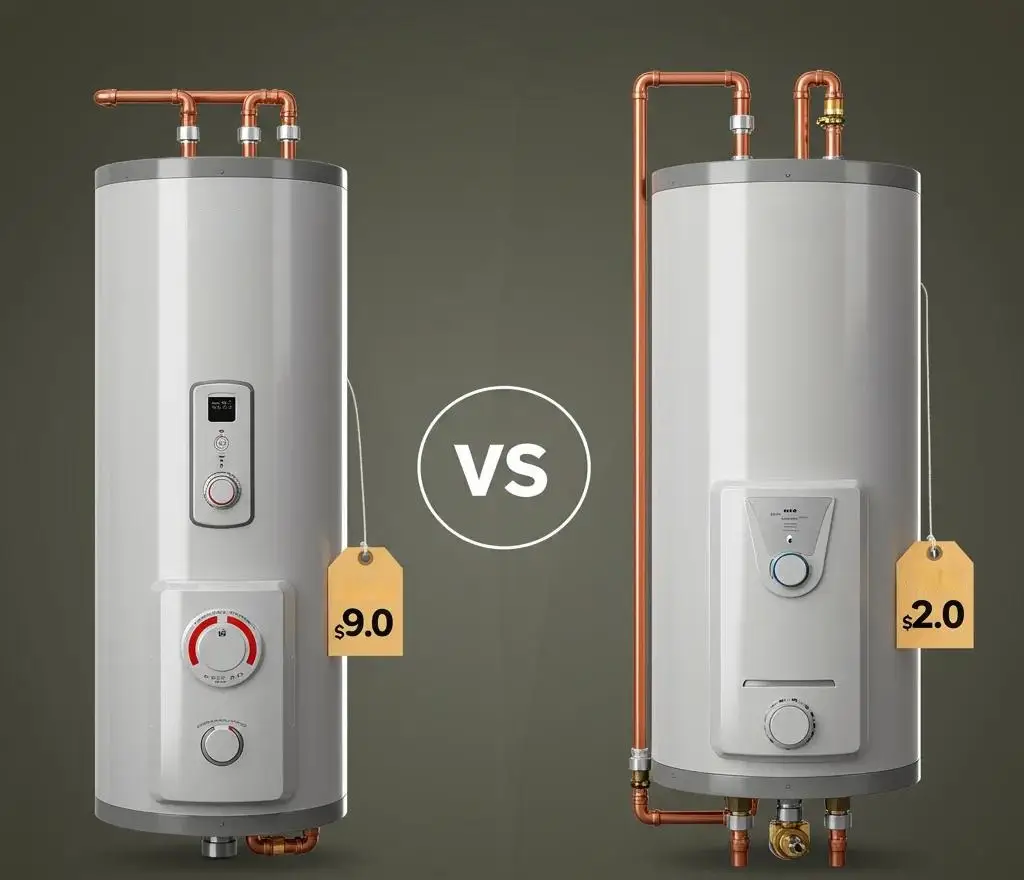
Electric water heaters heat stored water using resistance elements, offering simplicity and lower installation cost, while gas units use a burner fueled by natural gas or propane for faster reheating but require venting and more complex hookups. These core differences influence operating costs, recovery speed, energy efficiency ratings, and safety requirements for each system.
Electric models typically install anywhere there’s a 240-volt circuit and a bit of floor space, making them versatile for retrofits. Gas models need a proper gas line, a vent or chimney, and clearance for combustion air—requirements that can add to installation complexity. Understanding these foundational distinctions sets the stage for deeper cost, performance, and environmental comparisons.
How Does an Electric Water Heater Work?
An electric water heater uses insulated tanks fitted with one or two electrical resistance coils that draw power from your home’s 240-volt panel to heat water stored inside. Because electricity directly converts into heat without combustion, these units avoid flue gas emissions and venting, making them simpler to install in enclosed spaces. For example, a 50-gallon electric tank typically draws 4,500–5,500 watts per element, delivering uniform heat but reheating at a moderate pace—ideal for households with predictable hot water schedules.
How Does a Gas Water Heater Operate?
Gas water heaters ignite a burner under the steel tank, burning natural gas or propane to transfer heat through a flue that runs up through the tank’s center. This combustion process reheats cold water drawn from below faster than electric coils, often cutting recovery time by up to 30%. A typical gas burner outputs 30,000–40,000 BTU per hour and relies on properly sized venting to exhaust combustion byproducts safely outdoors.
What Are Heat Pump and Tankless Water Heaters?
Heat pump water heaters (hybrid models) extract warmth from surrounding air to heat water, using 2–5× less electricity than standard electric resistance units by leveraging refrigeration cycle principles. Tankless water heaters—available in electric or gas versions—heat water on demand as it flows through a heat exchanger, eliminating standby losses from storage but requiring greater energy output and, in gas units, adequate venting and gas line sizing. Both advanced alternatives offer efficiency gains and space savings, with heat pumps suited to moderate-climate utility spaces and tankless units favored where endless hot water and footprint reduction are top priorities.
How Do Electric and Gas Water Heaters Compare in Cost?
Upfront purchase and installation, ongoing energy bills, and any conversion expenses shape the total cost of owning a water heater. Evaluating each element helps homeowners project budgetary impact and payback periods when weighing electric vs gas options.
What Is the Upfront Cost of Electric vs Gas Water Heaters?
Electric water heaters generally cost between $400 and $900 for the tank plus $500–$1,000 for installation, since they only need a dedicated 240-volt circuit. Gas units typically run $600–$1,200 for a standard storage tank and $800–$1,500 to install, factoring in gas-line hookups, venting, and combustion safety devices.
Which Has Lower Operating Costs: Gas or Electric Water Heaters?
Gas water heaters often deliver lower monthly bills where natural gas rates remain below electricity prices. In many regions, gas models cost around $200–$400 per year to operate, compared to $300–$600 for electric tanks, though actual figures depend on your local utility rates and household hot water demand.
The choice between gas and electric water heaters can significantly impact monthly energy expenses, with gas often being more economical in regions where its price is lower than electricity.
Canadian Water Heater Energy Consumption: Gas vs. Electric Trends
Domestic water heating is estimated to be the second largest energy end-use for Canadian households, accounting for approximately 22 percent of total household energy consumption. Although the proportion of houses from 1945 to 1990 that uses natural gas for water heating and the proportion that uses electricity for this purpose are similar, in aggregate the general tendency is for new houses to increasingly use natural gas rather than electricity for domestic water heating requirements, even though natural gas is not available in all areas.
Fuel choice in Canadian households is influenced by availability, cost, and energy efficiency. Natural gas is increasingly preferred in regions where it is accessible, particularly for homes built after 1990.
Domestic water heating and water heater energy consumption in Canada, 2005
What Are the Conversion and Replacement Costs Between Gas and Electric?
Switching a home from electric to gas (or vice versa) typically adds $1,500–$3,000 in conversion expenses for rerouting piping, upgrading electrical capacity, installing venting, or extending gas lines. Simple replacement of the same fuel type normally costs $800–$2,000, including removal of the old unit, permits, and local code compliance checks.
Which Water Heater Type Offers Better Energy Efficiency and Environmental Impact?
Energy efficiency ratings and carbon outputs differ markedly between electric resistance, gas combustion, heat pump, and tankless systems. Comparing Uniform Energy Factor (UEF) values and emissions gives homeowners insight into operating savings and environmental footprint.
How Efficient Are Electric Water Heaters Compared to Gas Models?
Electric storage tanks carry UEF ratings from 0.90 to 0.95, meaning 90–95% of electricity consumed converts to hot water. Gas storage units range from 0.58 to 0.75 UEF due to heat loss through flue vents. Despite lower efficiency, gas can remain cost-effective where utility rates favor natural gas over electricity.
What Are the Benefits of Heat Pump Water Heaters vs Gas?
Heat pump water heaters boast UEF ratings of 2.0–3.5 by moving heat instead of generating it, cutting annual energy use by 50–70%. Utility rebates and tax incentives often offset higher upfront costs, making heat pumps an eco-savvy choice in moderate climates where ductless basement or garage installations can tap ambient heat.
How Does the Carbon Footprint of Gas Compare to Electric Water Heaters?
A gas water heater emits roughly 0.3–0.4 pounds of CO₂ per therm of gas burned. Electric resistance models produce no on-site emissions but shift the carbon footprint to power plants—averaging 0.6–0.9 pounds of CO₂ per kWh in many regions. As grids incorporate more renewable generation, electric units can become greener over time.
What Are the Lifespan and Recovery Rate Differences Between Electric and Gas Water Heaters?
Anticipating replacement cycles and knowing how quickly a unit can refill its hot water supply are key to matching performance with household needs.
How Long Do Electric Water Heaters Typically Last?
Electric storage tanks average 10–15 years of service when routinely flushed to remove sediment and when sacrificial anode rods are replaced every 3–5 years. Lower maintenance and simpler components contribute to longer service life in most installations.
What Is the Average Lifespan of Gas Water Heaters?
Gas heaters run 8–12 years before rust and burner corrosion lead to leaks or inefficiencies. Regular cleaning of the burner and inspection of the flue collar help maximize longevity, but more moving parts and combustion exposure typically shorten lifespan compared to electric tanks.
How Does Recovery Rate Affect Hot Water Availability in Gas vs Electric Models?
Recovery rate measures how many gallons of hot water per hour a unit can reheat after the initial tank volume is depleted. A standard gas heater recovers 30–40 gal/hr, while a similar-sized electric model recovers 20–25 gal/hr. Faster recovery in gas units reduces the chance of running out of hot water during back-to-back showers or heavy laundry loads.
| Water Heater Type | Average Lifespan (Years) | Typical Recovery Rate (gal/hr) |
|---|---|---|
| Electric Storage | 10–15 | 20–25 |
| Gas Storage | 8–12 | 30–40 |
| Heat Pump (Hybrid) | 10–15 | 20–30 |
| Tankless | 20+ | On-demand |
What Safety and Maintenance Considerations Should Homeowners Know?
Proper venting, pressure relief devices, electrical safeguards, and routine inspections are crucial for preventing hazards and extending water heater life.
What Are the Safety Risks of Gas Water Heaters?
- Regular inspection of gas lines and fittings prevents leaks.
- Annual flue and burner cleaning ensures proper draft.
- A functioning carbon monoxide alarm near the heater adds a layer of protection.
Preventing these risks demands a combination of homeowner vigilance and professional checks.
Are Electric Water Heaters Safer to Operate?
Electric heaters avoid combustion hazards but carry electrical shock and fire risks if wiring isn’t correctly sized or if heating elements short out.
- Tighten or replace corroded terminal connections.
- Test high-limit reset switches annually.
- Install ground-fault protection in damp areas to reduce shock potential.
With these precautions, electric models can offer a very safe hot water solution.
How Should You Maintain Electric and Gas Water Heaters for Longevity?

- Flush the tank annually to remove sediment that undermines heating efficiency.
- Inspect and replace sacrificial anode rods every 3–5 years to control corrosion.
- Verify pressure relief valve operation by lifting its test lever.
- Schedule professional inspections to confirm safe gas controls or electrical components.
Regular maintenance by qualified technicians secures warranty coverage and extends service life.
How Do You Choose the Best Water Heater for Your Home?
Selecting a system depends on hot water demand, available fuel sources, space constraints, regional utility rates, and budgetary priorities.
How Does Household Size and Hot Water Demand Influence Your Choice?
Larger families favor high recovery rates and larger tank capacities (50–80 gallons), making gas or high-capacity electric models practical. Small households or guest bathrooms can efficiently use a 30–40 gallon electric tank or a point-of-use tankless unit to reduce standby losses.
What Role Do Local Utility Rates and Rebates Play in Choosing Gas or Electric?
Where electricity costs exceed $0.12 per kWh, gas units usually deliver lower bills; if electricity runs below that threshold, electric or heat pump models can save you more over time. Utility and government rebates for energy-efficient models—especially heat pump water heaters—can slash upfront expenses by hundreds of dollars.
When Is a Tankless or Heat Pump Water Heater the Better Option?
Tankless systems shine where space is tight and continuous hot water is needed, such as in holiday homes or remote cabins. Heat pump models excel in garages or unfinished basements in moderate climates by delivering steep energy savings and rebate eligibility, offsetting their higher purchase price over a 3–5 year period.
Why Is Professional Installation and Repair Important for Water Heaters?
Expert installation and ongoing service safeguard performance, efficiency, warranty compliance, and safety for any water heater system.
What Does Professional Water Heater Installation Involve?
A licensed plumber ensures correct unit sizing, proper venting for gas appliances, accurate electrical wiring or gas line sizing, secure pressure-relief valve connections, condensation drainage where needed, and local code compliance. These steps prevent leaks, carbon monoxide issues, and electrical hazards from the start.
How Can Expert Repair and Maintenance Extend Your Water Heater’s Lifespan?
Professional service includes high-limit switch tests, burner or heating-element assessments, anode rod replacement, sediment removal, leak inspections, and control valve calibrations. By identifying minor issues early—like a drifting thermostat or corroded sacrificial anode—you avoid full tank replacements and preserve efficiency.
How Does Top Notch Plumbing Pros Support Your Water Heater Needs?
Top Notch Plumbing Pros provides thorough diagnostic evaluations, transparent cost estimates for installation, repair, or replacement, and scheduled maintenance plans tailored to your water quality and usage patterns. Our certified technicians bring the tools, expertise, and local code knowledge needed to keep your electric, gas, heat pump, or tankless water heater running safely and efficiently year after year.
Investing in the right water heater pays off through lower bills, dependable hot water, and peace of mind. Whether you lean toward electric simplicity or faster gas recovery, understanding cost factors, efficiency ratings, safety requirements, and maintenance best practices is crucial. When you choose a system that fits your household profile—backed by professional installation and ongoing support—you lock in years of trouble-free performance. Let our experienced team guide you to the perfect solution and keep your hot water flowing reliably for the long haul.